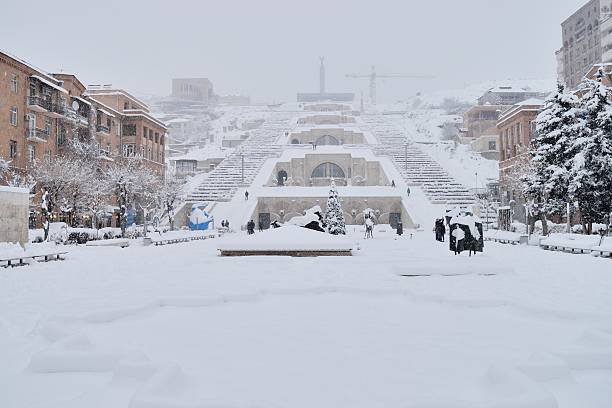
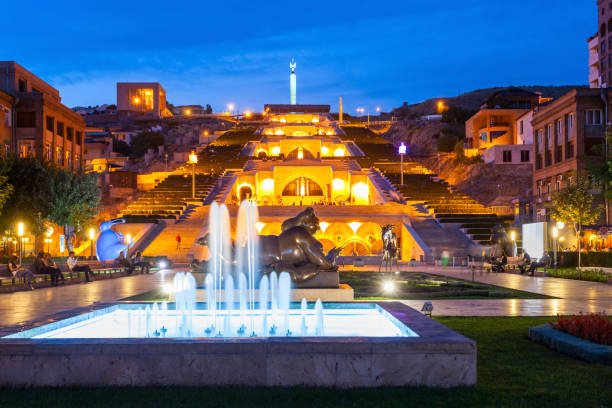
The Yerevan Cascade is the physical spine of Armenia’s capital. It is not merely a monument; it is a 302-meter high link between the historic city center and the northern heights. For visitors from the Gulf Cooperation Council (GCC) and the wider Arab world, the Cascade has evolved into a primary hub for leisure, offering a unique blend of Soviet grandeur, safe pedestrian spaces, and familiar Levantine hospitality.
Part I: The Scale and The History of Cascade
The Cascade sits on the "Northern Axis" of Yerevan, a concept originally drafted by architect Alexander Tamanyan in 1924. His vision was to create a wind tunnel for fresh mountain air and a visual corridor to Mount Ararat. However, the structure you see today is the result of three distinct eras: the Soviet idealism of the 1920s, the monumental construction of the 1980s under Jim Torosyan, and the philanthropic restoration by Gerard L. Cafesjian in the 2000s.
Height: 302 meters
Width: 50 meters
Total Length: 450+ meters
$128 Million
(Invested by the Cafesjian Foundation)
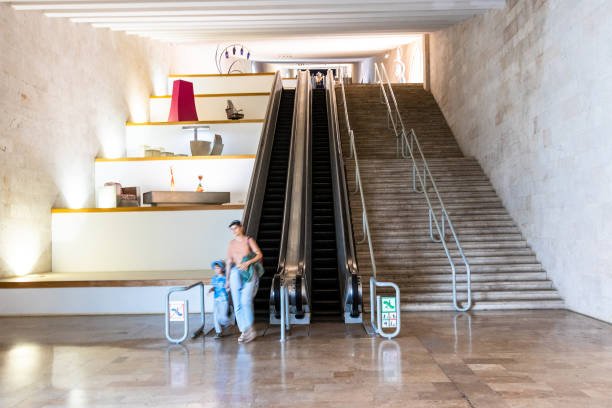
Construction began in 1980 but stopped abruptly following the 1988 Spitak Earthquake (which killed over 25,000 people) and the collapse of the Soviet Union. It stood unfinished until 2002, when Gerard Cafesjian invested heavily to install escalators, restore the fountains, and open the Cafesjian Center for the Arts.
Part II: Art in the Open Air in the Cascade
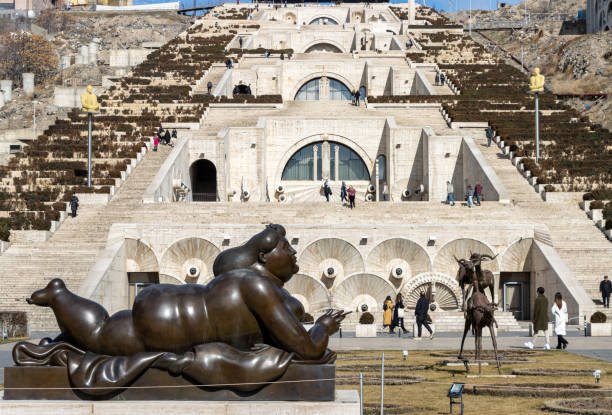
The complex functions as a massive open-air museum. The Cafesjian Center for the Arts (CCA) manages the sculpture garden, which features works that contrast sharply with traditional Soviet statues.
The Botero Connection
Colombian artist Fernando Botero dominates the visual landscape. His figures are defined by "voluminous" proportions:
- The Cat (Gato): Located at the base, this bronze feline is the complex's unofficial mascot.
- Roman Warrior: A massive bronze gladiator.
- Smoking Woman: A figure challenging traditional representations of femininity.
Part III: Why Arab Tourists Choose the Cascade
Recent years have seen a significant demographic shift in Armenian tourism, with a rising influx of visitors from the UAE, Kuwait, Qatar, and Saudi Arabia. The "Open Skies" policy and visa waivers have reduced travel friction, while the temperate climate offers relief from Gulf summers where temperatures exceed 45°C (113°F).
For the Arab family, the Cascade offers three specific benefits:
1. The "Evening Promenade" Culture
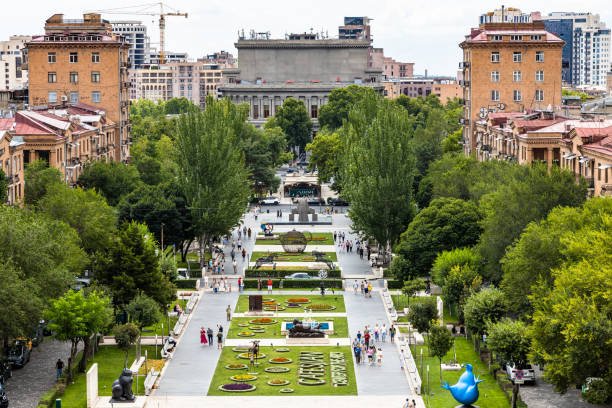
The pedestrian-only Tamanyan Street allows for the traditional evening walk. It is a "living room" environment where children can run safely while parents socialize on benches, mirroring the social habits of Gulf families.
2. The Syrian-Armenian Culinary Bridge
Following the Syrian Civil War in 2011, thousands of Syrian-Armenians repatriated to Yerevan. They established a hospitality infrastructure that acts as a cultural bridge. These restaurateurs speak fluent Arabic and understand the nuances of Halal dietary requirements, offering immediate comfort to Arab visitors.
3. A Robust Shisha Ecosystem
The area surrounding the Cascade has become the epicenter of shisha (hookah) culture in Yerevan. Outdoor venues capitalize on the views, catering to the late-night social hours common in Arab cultures.
Part IV: A Guide to Venues & Amenities
Based on travel search data and reviews, the following establishments near the Cascade meet specific needs regarding Halal food, shisha quality, and family accommodation.
Dining (Halal-Friendly & Levantine)
Beirut Bar & Restaurant
Located directly on the promenade. Offers Mezze and Shawarma. Staff often speak Arabic.
Shirvan Persian Restaurant
Explicitly markets as Halal. Known for Kubideh and lamb dishes. Highly rated for food quality.
Taboule Restaurant
Features a Halal sign. Focuses on fresh Lebanese cuisine. Excellent for families.
Leisure (Shisha & Views)
Voodoo Hookah Lounge
Open late/24-7. Caters to the late-night social crowd typical of Gulf travelers.
Cascade Royal
Located at the top of the Cascade. Premium pricing, best used for tea/coffee and the view of Mount Ararat.
Religious Facilities
While the Cascade is the leisure hub, the spiritual anchor is the Blue Mosque (Goy Miskit).
Built in 1765 by Hussein Ali Khan, it is the only active mosque in Yerevan. It is located approximately 1.5km from the Cascade down Mashtots Avenue. It is open for prayers, including the Friday Jumu'ah service, and offers a quiet courtyard with apricot trees that families often appreciate.
Conclusion
The Yerevan Cascade serves as a cosmopolitan bridge. For the Arab tourist, it provides a rare combination: the safety and climate of Europe mixed with the linguistic and culinary comforts of the Levant. As Yerevan continues to develop this "Northern Axis," the integration of high-quality service standards driven by this demographic will likely continue to shape the city's tourism economy.