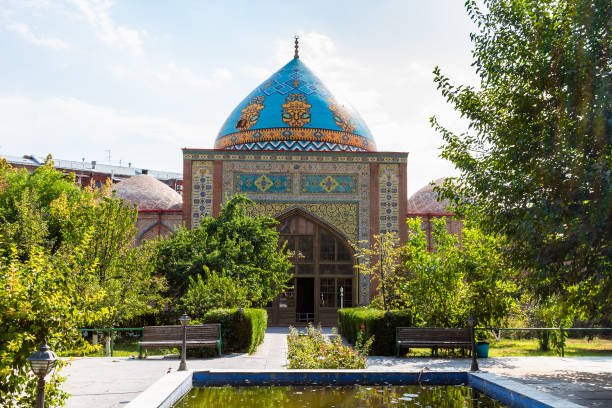
In Yerevan, where the skyline is defined by the pink tuff of Soviet Neoclassicism, the Blue Mosque (Kapuyt Mzkit) stands as a striking anomaly. Located at 12 Mesrop Mashtots Avenue, this 18th-century complex is the only functioning Islamic monument in Armenia. Yet, it is more than a religious remnant; it is a modern instrument of diplomacy between Yerevan and Tehran.
While the early 19th-century Erivan Khanate boasted eight congregational mosques, the Blue Mosque is the sole survivor. Its preservation was secured by Armenian intellectuals who repurposed the site as a sanctuary for the arts during the Soviet era, shielding the sacred space with a veneer of cultural utility.
The mosque’s origins lie in the fractured power structure of the mid-18th century South Caucasus. Following Nader Shah Afshar's assassination in 1747, the region split into semi-autonomous khanates. Huseyn Ali Khan Qajar, the governor of Erivan, commissioned the mosque to rebuild the city's infrastructure after the devastating earthquake of 1679.
Commissioned By: Huseyn Ali Khan QajarCompletion Date: 1765–1766 AD (1179 AH)
Unlike fortress mosques reserved for the elite, the Blue Mosque was built in the city proper (shahr). It functioned as a civic anchor next to the bazaar and hammam, integrating prayer into the commercial life of Old Erivan.
The structure exemplifies the transition from Safavid ideals to Qajar vernacular. It lacks the massive scale of Isfahan but offers a refined, introverted spatial logic.
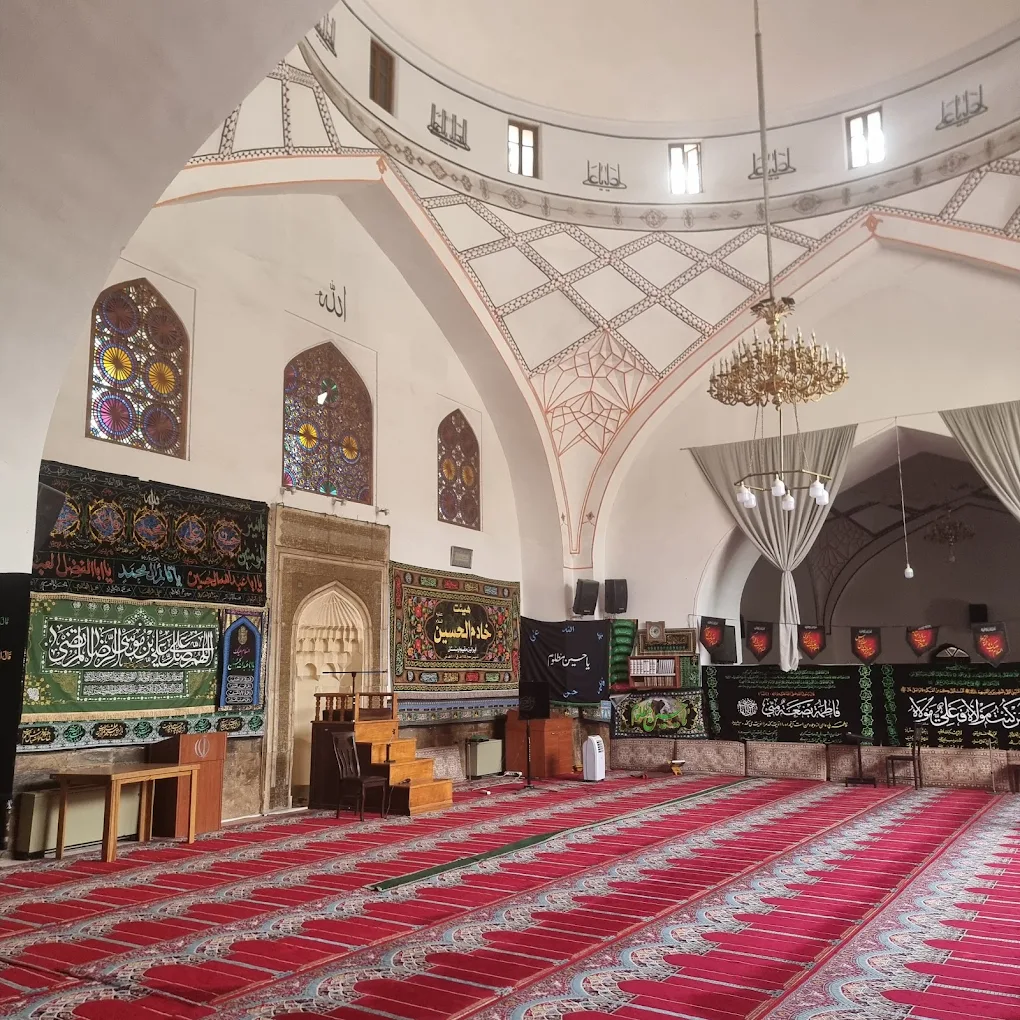
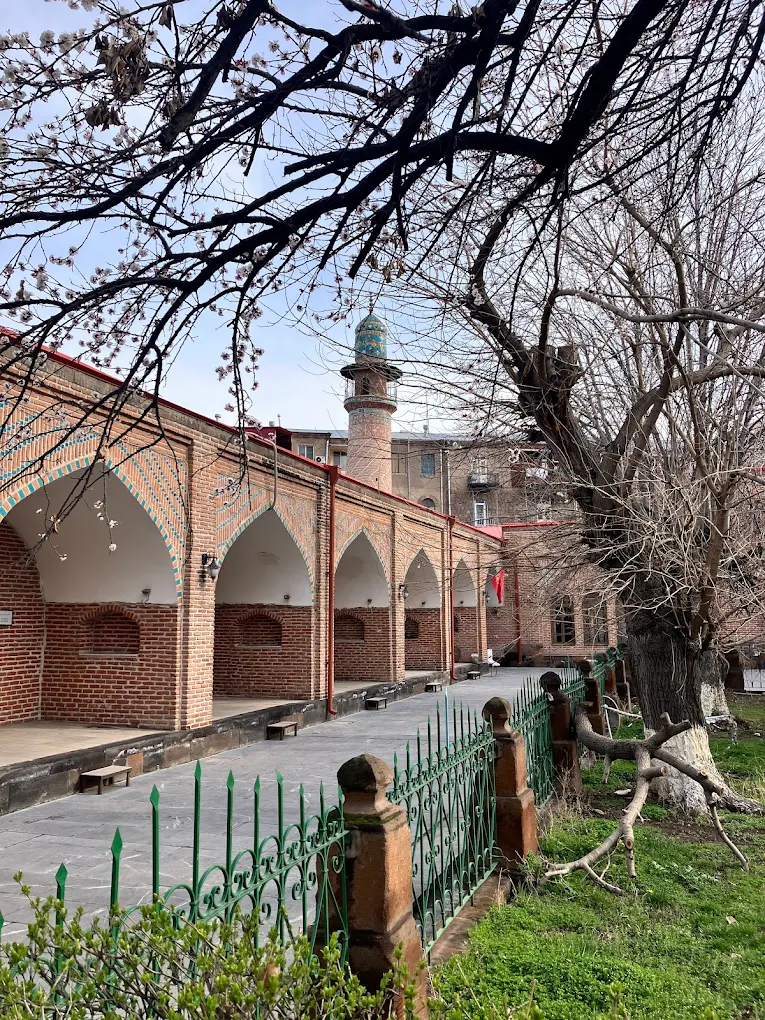
A persistent debate exists regarding the original number of minarets. While certain sources claim four, architectural analysis and 19th-century surveys consistently show a single minaret, a standard for provincial mosques in the Erivan Khanate.
Following the 1828 Treaty of Turkmenchay, the Russian administration recorded the Blue Mosque as the city's largest. It became a curiosity for European travelers like H.F.B. Lynch and underwent significant renovations in 1887 funded by local merchants.
Alexander Tamanian’s 1924 master plan raised the street level of Mashtots Avenue, sinking the mosque below grade. Intellectuals like Yeghishe Charents saved it by arguing for its value as "Eastern architecture," repurposing it into various secular roles:
In 1995, rights were transferred to the Iranian government under a 99-year lease. A $1 million restoration effort replaced weathered facades with pristine Isfahani tiles, reinforcing the site as an Iranian Cultural Center.
The site remains a focal point of identity politics. Armenia and Iran classify the mosque as "Persian," reinforcing diplomatic ties. Conversely, Azerbaijan views it as "Azerbaijani" heritage, arguing the "Persian" label erases the history of the Turkic Erivan Khanate.
| Period | Year | Event |
|---|---|---|
| Erivan Khanate | 1766 | Completion of the Mosque. |
| Russian Empire | 1827 | Russian conquest; recorded as city's largest mosque. |
| Soviet Union | 1930s | Converted to Museum; saved by Charents. |
| Independence | 1995 | Restoration begins ($1M budget) by Iran. |
| Modern Era | 2025 | US Embassy issues security warning; new restoration phase requested. |
The Blue Mosque of Yerevan is a solitary sentinel. It defies binary narratives: a Persian-style mosque built by a Turkic Khan in a Christian capital, preserved by secular poets. As the South Caucasus navigates new geopolitical realities, the mosque remains a dynamic barometer of intercultural relations.