The Blue Mosque of Yerevan: Architectural Morphology, Historical Stratigraphy, and Geopolitical Resonance

Jan 21 2026
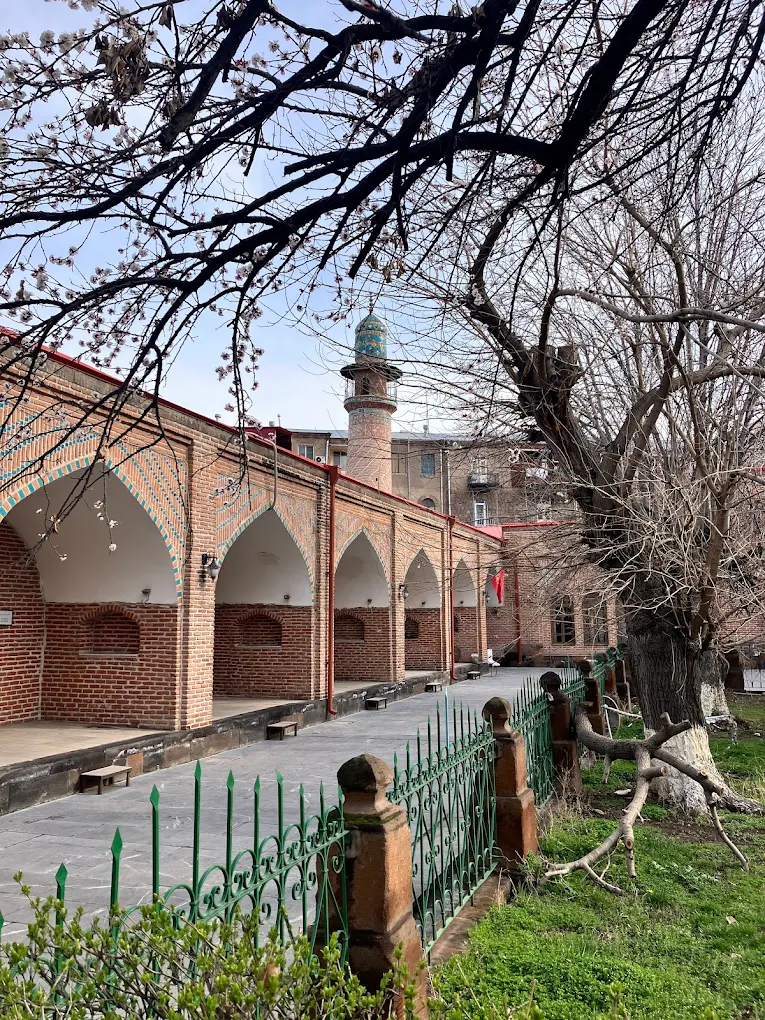
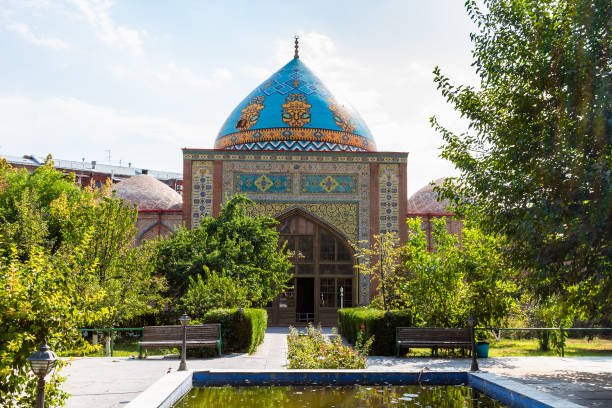
Blue Mosque building in green courtyard in Yerevan city on sunny autumn day. The Blue Mosque is Shia mosque, it was built in 1766

In Yerevan, where the skyline is defined by the pink tuff of Soviet Neoclassicism, the Blue Mosque (Kapuyt Mzkit) stands as a striking anomaly. Located at 12 Mesrop Mashtots Avenue, this 18th-century complex is the only functioning Islamic monument in Armenia. Yet, it is more than a religious remnant; it is a historiographical palimpsest that has survived the Erivan Khanate, the Russian Empire, and the Soviet Union to become a modern instrument of diplomacy between Yerevan and Tehran.

While the early 19th-century Erivan Khanate boasted eight congregational mosques, the Blue Mosque is the sole survivor. Its preservation was not secured by religious authority, but by Armenian intellectuals who repurposed the site as a sanctuary for the arts during the Soviet era, shielding the sacred space with a veneer of cultural utility.

I. The Geopolitical Genesis: The Erivan Khanate

The mosque’s origins lie in the fractured power structure of the mid-18th century South Caucasus. Following Nader Shah Afshar's assassination in 1747, the region split into semi-autonomous khanates. Huseyn Ali Khan Qajar, the governor of Erivan, commissioned the mosque to assert political legitimacy and rebuild the city's infrastructure after the devastating earthquake of 1679.

Commissioned By: Huseyn Ali Khan Qajar Completion Date: 1765–1766 AD (1179 AH)

Unlike fortress mosques reserved for the elite, the Blue Mosque was built in the city proper (shahr). It functioned as a civic anchor next to the bazaar and hammam, integrating prayer into the commercial life of Old Erivan.

II. Architectural Morphology: A Safavid-Qajari Hybrid

The structure exemplifies the transition from Safavid ideals to Qajar vernacular. It lacks the massive scale of Isfahan but offers a refined, introverted spatial logic.
The Layout

The Four-Iwan Plan

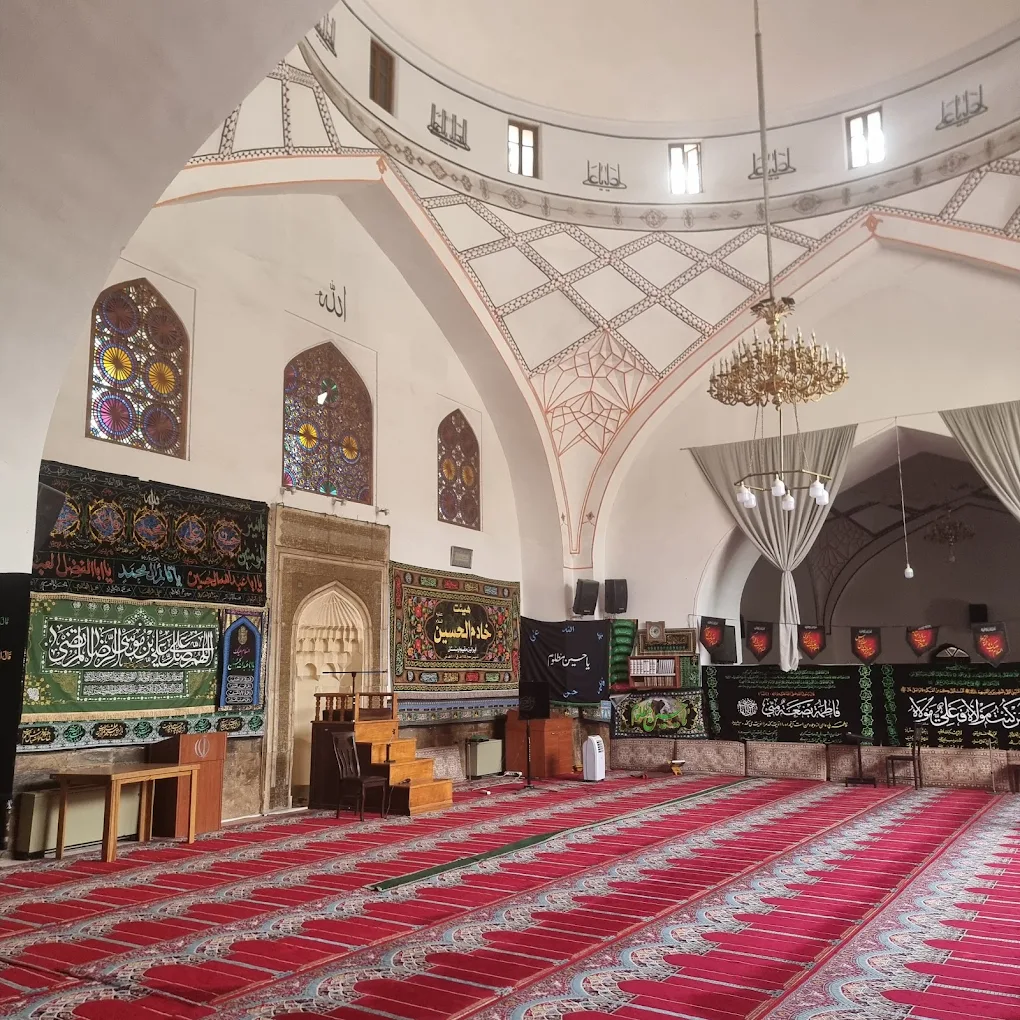
The complex is organized around a 71x47 meter central courtyard. This "paradise garden" (charbagh) is lined with 28 vaulted cells (hujra) that once served as a theological seminary, creating a microclimate of silence away from the street.

The Feature

The Blue Dome

The mosque derives its name from its bulbous dome. Clad in cobalt, turquoise, and azure faience tiles, the dome follows the Persian profile—swelling at the base before tapering—distinct from the hemispherical Ottoman style.

The Marker

The Minaret

Standing 24 meters tall, the single minaret features geometric patterns in glazed brick. It leans 7 degrees due to seismic activity and soil settling, a structural quirk confirmed by engineering assessments.

blue-masque-inside

The "Four Minarets" Controversy

A persistent debate exists regarding the original number of minarets. Certain Azerbaijani sources claim the mosque originally had four minarets, three of which were destroyed. However, architectural analysis and 19th-century cadastral maps (including Lynch's 1890s surveys) consistently show a single minaret. The "four-minaret" configuration was reserved for imperial mosques, whereas provincial mosques in the Erivan Khanate typically featured one or two.

III. Survival Through Empires

The Russian Imperial Era (1827–1917)

Following the 1828 Treaty of Turkmenchay, the Muslim elite retreated to Iran. However, the Russian administration recorded the Blue Mosque as the city's largest. It became a curiosity for European travelers like H.F.B. Lynch, who admired its floral wall paintings, and underwent significant renovations in 1887 and 1907 funded by local merchants.

The Soviet Interlude (1920–1991)

Alexander Tamanian’s 1924 master plan for Yerevan raised the street level of Mashtots Avenue by two meters, sinking the mosque below grade. While other mosques were demolished, the Blue Mosque was saved by the intervention of intellectuals like Yeghishe Charents. They argued for its value as "Eastern architecture," repurposing the courtyard as a tea house and artist salon.

To ensure its survival, the building was adapted into various secular roles:

  • 1930s: Anti-Religious Museum
  • WWII: Museum of Antifascism
  • Late Soviet: Planetarium (using the dome to project the cosmos) and Yerevan History Museum.
blue-masque-outdoor-view

IV. Contemporary Geopolitics (1991–Present)

With the collapse of the Soviet Union, the mosque gained new significance as a bridge between independent Armenia and Iran. In 1995, rights were transferred to the Iranian government, funded by a $1 million restoration effort that replaced weathered facades with pristine Isfahani tiles.

Current Status: Iranian Cultural Center Lease Term: 99 Years (Extended in 2015)

A Geopolitical Lightning Rod

The site remains a focal point of identity politics. Armenia and Iran classify the mosque as "Persian," reinforcing their diplomatic ties. Conversely, Azerbaijan views it as "Azerbaijani" heritage, arguing that the "Persian" label erases the history of the Turkic Erivan Khanate.

The stakes were highlighted in 2025 when the US Embassy in Yerevan issued security alerts regarding locations with "known Iranian government affiliation," specifically naming the mosque. Simultaneously, Tehran has requested further restorations to upgrade the site into a tourism information center, deepening its soft power footprint in the Caucasus.

Appendix: Chronology of the Blue Mosque

PeriodYearEvent
Erivan Khanate1766Completion of the Mosque (1179 AH).
Russian Empire1827Russian conquest; Mosque recorded as largest in city.
Soviet Union1930sConverted to Anti-Religious Museum; saved by Charents.
Independence1995Restoration begins ($1M budget) by Iranian government.
Modern Era2025US Embassy issues security warning; Iran requests new restoration phase.

Conclusion

The Blue Mosque of Yerevan is a solitary sentinel. Its azure dome covers a space that has been a prayer hall, a museum of atheism, and a diplomatic enclave. It defies binary narratives: a Persian-style mosque built by a Turkic Khan in a Christian capital, preserved by secular poets. As the South Caucasus navigates new geopolitical realities, the mosque remains a dynamic barometer of intercultural relations.


Travel Blog

Latest Articles

Budget Travel in armenia

Budget Travel in Armenia: The Ultimate Guide for Smart Explorers

Have you ever dreamed of visiting a country that’s rich in history, blessed with breathtaking landscapes, and filled with warm-hearted people — all without spending a fortune? Armenia is an excellent choice for Arab travelers who want to experience something unique and affordable.

vardavar in armenia

Vardavar: Armenia’s Timeless Festival of Water, History, and Joy

In the rugged, mountainous topography of the South Caucasus, the Armenian summer presents a formidable climatic reality. By mid-July, the Ararat valley and the surrounding highlands are subjected to intense solar radiation, with temperatures frequently soaring above 38°C (100°F).

from Dubai to Armenia

Traveling to Armenia from Dubai/Abu Dhabi: Flights and Entry Rules

Lately, many friends from Dubai and Abu Dhabi are talking about Armenia—and for good reason. It’s just a quick three-hour flight away, with simple visa rules for most, and it’s nothing like the usual tourist spots everyone visits.

Best Travel Theme

Elementor Demos

With Love Travel WordPress Theme you will have everything you need to create a memorable online presence. Start create your dream travel site today.

Discover the Armenia world, one adventure at a time!

Our Contacts

Address

Charents 169 - Yerevan

Armenia

Email
Phone

098883077 Nour Armenia Tours

Follow us: